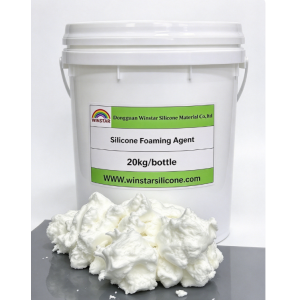
Internal Foam Control Additive for HCR, LSR & RTV Silicone
If you are producing silicone parts by compression molding, extrusion or LSR injection, trapped micro bubbles and surface blisters are one of your biggest headaches. Air gets wrapped into silicone compound during kneading, mixing and feeding. Moisture and volatile substances inside raw silicone also generate gas under high molding temperature. Even with vacuum degassing and mold venting, tiny bubbles still remain, forming pinholes, honeycomb voids, surface pits and blisters on finished silicone products. These defects lead to high rejection rate, poor sealing performance and ugly appearance. Many traditional defoamers will inhibit platinum curing, cause blooming, turn transparent silicone yellow, or reduce the tear strength and compression resistance of silicone. You need a silicone-compatible internal defoamer that efficiently eliminates micro bubbles, does not interfere with vulcanization and keeps your silicone’s original mechanical properties.
Our silicone defoamer is a modified polysiloxane foam-control additive for internal blending into silicone compound.
Important note: This product is an internal bubble removal additive, NOT silicone rubber itself. It must be mixed evenly with vinyl HCR, LSR or RTV silicone before vulcanization. It is not a surface spray defoamer.
Working Principle
This silicone defoamer adopts low-surface-tension modified siloxane structure compounded with hydrophobic silica. After uniformly dispersed inside silicone matrix, it quickly penetrates the bubble film, reduces the surface tension of bubble wall, accelerates the merging and escaping of tiny micro-bubbles during mixing and heating. It helps bubbles rise and release before crosslinking completes. It is formulated to be platinum-friendly and will not poison the addition curing system.
Key Advantages
✅ Fast micro-bubble elimination — removes tiny pinholes and internal honeycomb bubbles effectively ✅ Platinum curing compatible — no cure inhibition for platinum addition silicone system ✅ Low dosage requirement — obvious defoaming effect with small addition amount ✅ Non-blooming & non-migratory — no oil precipitation on silicone surface after molding ✅ Less impact on silicone properties — barely change hardness, tensile strength and tear resistance ✅ Good heat resistance — stable under high-temperature molding process ✅ Transparent grade available — keeps good clarity for clear silicone products ✅ RoHS & REACH compliant — food contact and medical formula optional
Suitable Materials & Application Fields
- Compatible with: HCR high consistency vinyl silicone rubber, LSR liquid silicone, two-part RTV silicone
- Typical finished silicone products: Silicone sealing gaskets, silicone kitchen utensils, baby silicone products, transparent silicone tubes, silicone rollers, electronic insulation pads, silicone mold parts, medical silicone accessories
- Target industries: Food contact, medical, automotive, electronic sealing, household silicone, precision silicone accessories
Operation Guide
- Add this defoamer into silicone compound or LSR A component before mixing with curing agent.
- Mix slowly and evenly to achieve full dispersion; avoid over-shearing and excessive air entrapment.
- Recommended addition ratio: 0.3% ~ 1.5% by weight, adjust dosage according to bubble condition and silicone viscosity.
- Complete vacuum degassing and vulcanization following your original molding process.
- Run small lab trial first to confirm defoaming effect, curing status and surface appearance before mass production.
Specification Table
| Item | Parameter |
|---|---|
| Product Type | Internal blending silicone defoamer / antifoam additive |
| Appearance | Colorless / light off-white translucent paste or liquid |
| Active Content | ≥97% |
| Viscosity (25℃) | 800–6000 mPa·s (customizable) |
| Working Temperature Range | -50℃ ~ 220℃ |
| Storage | Cool, dry, sealed container, away from sunlight |
| Shelf Life | 9 months under proper sealed storage |
| Compliance | RoHS, REACH; support FDA / LFGB customized grade |
Safety Instruction
Operate in a well-ventilated workshop. Wear chemical resistant gloves and protective goggles. Keep away from open flame and strong oxidizing agents. MSDS and TDS technical datasheet can be provided upon request.
FAQ (Pre-sales Questions)
Q1: Can this defoamer be used for platinum-cured LSR liquid silicone?
A: Yes, our standard grade is designed compatible with platinum addition cure system. It also works well for peroxide-vulcanized HCR silicone.
Q2: Will this defoamer cause blooming or oily surface on silicone parts?
A: It is low-migration formula. Within recommended dosage, blooming and surface oil residue risk is very low. Overdose will increase migration risk.
Q3: Can I use it for highly transparent silicone products?
A: We have special transparent grade defoamer. The standard grade may slightly affect transparency for ultra-clear silicone, please tell us your requirement in advance.
Q4: Does the defoamer affect the hardness of silicone rubber?
A: Under recommended dosage range, it has negligible influence on silicone hardness. If you need zero-hardness-change formula, we can customize it.
Q5: Can I mix it together with antistatic agent, color paste and other silicone additives?
A: Most silicone additives are compatible. We strongly recommend a small compatibility test when multiple additives are used together.
Troubleshooting (Common Problems & Solutions)
Q1: Why do I still have bubbles and pinholes after adding the silicone defoamer?
Cause: Insufficient defoamer dosage; poor dispersion during mixing; excessive moisture or volatile content inside silicone raw material; vacuum degassing time is too short. Solution: Increase dosage gradually within our suggested range; extend mixing time; dry silicone raw material before use; prolong vacuum degassing time.
Q2: Why silicone fails to cure or cures partially after adding this defoamer?
Cause: Overdose of defoamer; the defoamer reacts with sulfur, amine or other inhibitor substances from color paste, release agent. Solution: Reduce the addition amount back to the recommended range; check all auxiliary additives to confirm they are platinum compatible.
Q3: Why oily film or blooming appears on silicone surface after molding?
Cause: Excessive addition beyond saturation limit; improper high-temperature post-curing; incompatible base silicone gum. Solution: Cut down dosage; lower post-curing temperature or shorten post-curing time; test compatibility with your silicone base.
Q4: Why does the transparency of clear silicone become worse after adding?
Cause: Selected grade is not for transparent silicone; uneven dispersion leads to local agglomeration. Solution: Switch to our transparent customized defoamer grade; optimize mixing speed and mixing time.
Q5: Why does the defoaming effect become unstable in summer high-temperature workshop?
Cause: Higher ambient temperature accelerates silicone crosslinking; bubbles do not have enough time to escape before curing. Solution: Adjust the curing cycle; slow down molding speed; use a slightly higher dosage for high-temperature workshop environment.
Q6: Why do big air bubbles still appear instead of tiny pinholes being removed?
Cause: This additive targets micro-bubbles inside silicone, it cannot replace vacuum degassing and mold venting for large trapped air. Solution: Optimize mold vent structure and vacuum process; use this defoamer as auxiliary foam control.
Contact Us
If you are troubled by pinholes, blisters and internal honeycomb defects that keep pushing up your rejection rate, get our silicone defoamer sample for lab test first.
Send us your silicone type (HCR / LSR / RTV), curing system, molding temperature and defect situation. We will recommend the right grade, suitable dosage and provide technical support together with quotation.
- Hi, Winstar Silicone company, we are interested in your product silicone color masterbatch, could you please offer some free samples to us? Our company address: ***LA,USA
- Hello Winstar, our product is compression molding product,could you advise which peroxide curing agent to use ?
- Hi friend, we have some problem in silicone to PVC bonding, that bonding strength is not well at all, how to improve it please ?