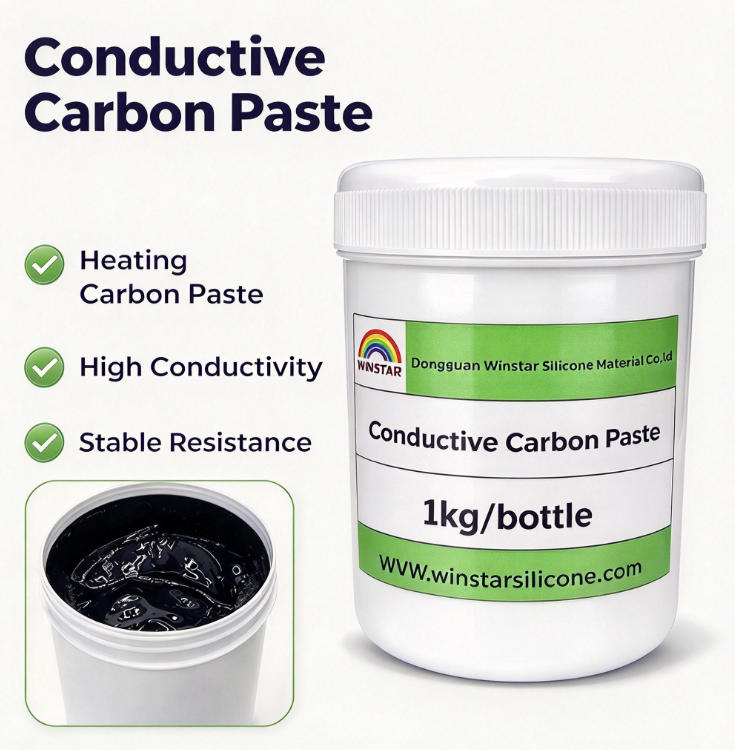
Conductive Carbon Paste
Product Definition
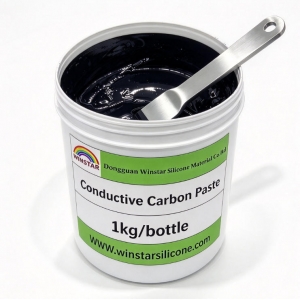
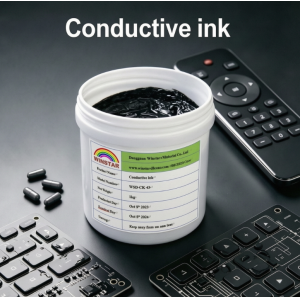
Conductive carbon paste (carbon conductive ink) is a functional conductive slurry. It uses thermoplastic or thermosetting resin as binder, carbon black or graphite as conductive filler, matched with organic solvent and dispersing additives. It forms conductive film on substrates by screen printing or blade coating, for electric conduction, static dissipation, EMI shielding and conductive circuit manufacturing.
Product Description
Conductive carbon paste is black viscous liquid slurry, mostly single-component type (a few are two-component). No multi-part mixing required for most grades. Diluent can be added to adjust viscosity for printing. After screen printing on substrates, cure by baking or UV light. Continuous carbon conductive film forms after solvent evaporation. It focuses on stable sheet resistance and fine printing performance, without high elasticity or tear resistance requirement.
Advantages
- Adjustable conductivity, wide resistance range for customization.
- Easy processing, suitable for mass production via screen printing.
- Low curing temperature, most grades cure at 80~130℃, low energy consumption.
- Good adhesion on PET, PI, PC, FR4 and other plastic & film substrates.
- Long shelf life; single-component paste has no short pot-life limit after opening.
- Able to print thin and fine conductive traces.
Technical Specifications (General Grade)
| Item | Specifications |
|---|---|
| Product Name | Conductive Carbon Paste / Carbon Conductive Ink |
| Appearance | Black viscous slurry |
| Component | Mostly single-component (few two-component versions) |
| Filler | Carbon black / graphite carbon filler |
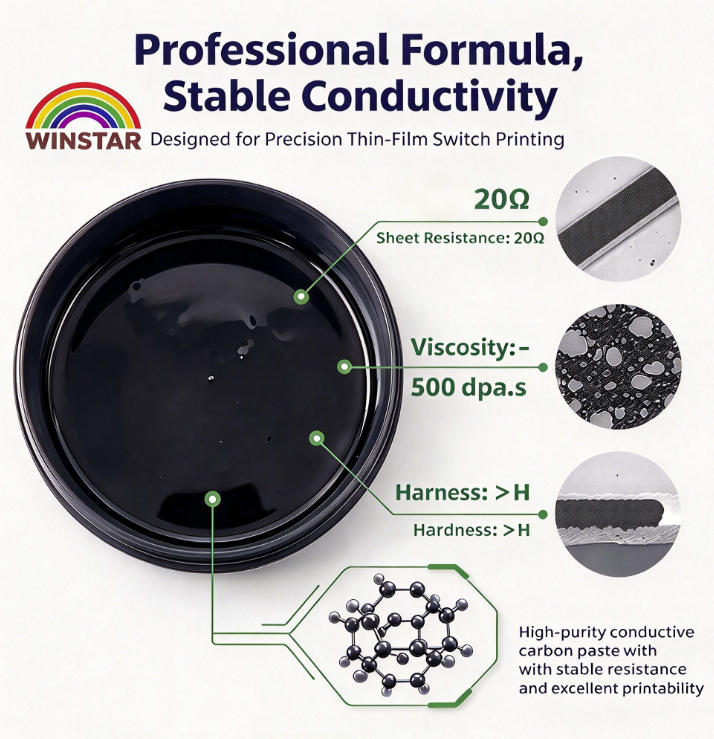
| Viscosity | 8000~50000 cps (adjustable for screen printing) |
| Recommended Application | Screen printing (200~400 mesh screen), blade coating; NOT suitable for spraying |
| Diluent | Manufacturer’s special thinner (toluene is not commonly used) |
| Curing Options | 1. Thermal cure: 80~130℃, 10~30 min2. UV cure: UV radiation, no high temperature needed |
| Typical Resistance | Sheet resistance: tens Ω/□ ~ MΩ/□ (customizable) |
| Film Thickness | 5~25μm after printing & curing |
| Shelf Life (unopened) | 6~12 months, sealed & stored at 25℃ away from light |
| Pot life | Single component: no 12-hour limit |
| Application Condition | Normal temperature & dust-free environment, no strict 22℃ constant T&H requirement |
| Note | Parameters vary by manufacturer, refer to supplier COA. |
Packing & Shelf life
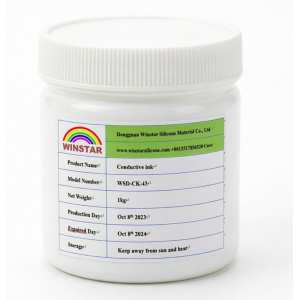
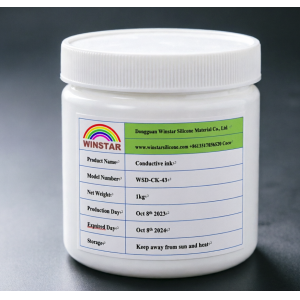
- Packing: 1kg/bottle
- Shelf life: 12 months
Application Scope & Products
Function: Print conductive traces on insulating substrates for conductivity, anti-static and EMI shielding.
- Membrane switches, PET flexible keypads
- FPC flexible circuits, PI flexible substrate circuits
- Anti-static & grounding coating for PCB
- Resistive touch screen conductive circuits
- Film capacitors, lithium battery current collectors, anti-static labels
- EMI shielding / anti-static coating for plastic housings
NOT suitable: High voltage silicone rubber cable accessories, lightning arrester field grading. Ordinary carbon paste film lacks elasticity, cracks easily with silicone deformation, poor corona & outdoor aging resistance.
Application Method
- Stir thoroughly before use to re-disperse settled carbon filler.
- Adjust viscosity (optional): add recommended thinner step by step if needed, stir well.
- Screen printing: print onto substrate with matched mesh screen.
- Flash-off (optional): room temperature flash to evaporate most solvent.
- Cure: thermal bake or UV curing as product specification.
- Post-check: test sheet resistance and adhesion after cooling.
- Hi, Winstar Silicone company, we are interested in your product silicone color masterbatch, could you please offer some free samples to us? Our company address: ***LA,USA
- Hello Winstar, our product is compression molding product,could you advise which peroxide curing agent to use ?
- Hi friend, we have some problem in silicone to PVC bonding, that bonding strength is not well at all, how to improve it please ?